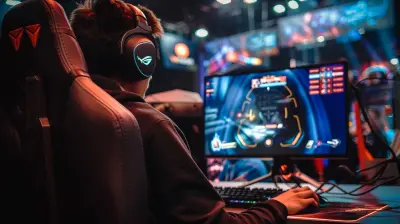
The Fine Line Between Free-to-Play and Pay to Win
23 June 2026
Let’s be honest—nothing feels better than jumping into a new game without having to open your wallet first. Free-to-play (F2P) games have exploded in popularity, making gaming more accessible than ever. But sometimes, as you dive deeper, you might start noticing something a bit... off. That dude who just crushed you in PvP? Yeah, he’s probably spent a few hundred bucks on gear upgrades. Suddenly, it’s not feeling so “free” anymore, is it?
Welcome to the debate that never seems to die: where exactly is the line between free-to-play and pay to win?
In this article, we’re gonna unpack it all—what F2P really means, when and why games start to feel pay-to-win (P2W), how developers try to balance it, and how all this affects us as players. It’s a messy subject, but one that’s important in today’s gaming world.
What Does "Free-to-Play" Even Mean?
At its core, a free-to-play game is just that—a game you can download and play without spending a single cent. Think Fortnite, Apex Legends, or even mobile hits like Clash Royale. The idea is you get access to the full or core gameplay experience without ever needing to pay.But let’s be real: developers don’t work for free, and servers don’t pay for themselves. These games still need to make money, and that’s where microtransactions come in.
Common Revenue Models in F2P Games
- Cosmetics: Skins, emotes, outfits, etc. These don’t impact gameplay but let you flex your style.- Battle Passes: Time-limited unlock systems with both free and premium tracks.
- Convenience Items: Boosts, faster resource generation, or extra inventory space.
- Gacha/Random Drops: Loot boxes or summon systems you pay into, often with a chance to get rare items.
And then there’s the dark side—when real cash buys you a real edge.
Pay-to-Win: The Slippery Slope
So when does a F2P game cross the line into pay-to-win territory?Generally, a game is considered P2W when spending money gives players a significant gameplay advantage—be it stronger gear, better characters, faster progression, or a higher win rate. In short, when your wallet starts determining your skill level, that’s when you have a problem.
Examples of P2W Behavior
- Stat-Boosting Gear Behind a Paywall: Games where the best weapons or armor can only be bought with real money.- Pay to Skip: Players who pay to bypass long grindy parts of the game end up far ahead.
- Exclusive Premium Characters or Units: Especially in competitive PvP settings, locking these behind paywalls instantly tilts the playing field.
Sound familiar? If you’ve ever been wrecked in a mobile strategy game by someone with max-leveled heroes on Day 2—you’ve probably been P2W’d.
Why Is It So Controversial?
Because it feels unfair.Gaming should be about skill, strategy, and a bit of luck—not who has the deepest pockets. When paying players constantly dominate, it discourages everyone else. Free players feel cheated, competitive integrity takes a hit, and even paying players might burn out due to “whale wars”—where only the biggest spenders can compete.
And guess what? This doesn’t just hurt players. It can hurt games too.
The Impact on Gaming Communities
Nothing divides a community quicker than pay-to-win mechanics. Here’s how:- Toxicity and Gatekeeping: Paying players may mock or exclude F2P users.
- Segregated Player Bases: If matchmaking pits spenders against non-spenders, it creates a pretty unbalanced and unenjoyable experience.
- Reduced Player Retention: New players might quit if they realize they can’t keep up without spending money.
At its worst, a P2W model can hollow out a game’s community, leaving only the few who can afford to stay competitive.
Can Pay-to-Win Be Justified?
Hot take: not all pay-to-win mechanics are inherently evil.Hear me out—some people are genuinely time-poor but cash-rich. If someone works 12-hour shifts and still wants to enjoy an MMO without grinding 40 hours for that fancy sword, is it wrong for them to pay to speed things up?
But even then, there’s a fine line. If that sword makes them invincible in PvP or dungeons, yeah... Houston, we have a problem.
The challenge is balance. Offering convenience without breaking the core gameplay loop. Let players feel rewarded regardless of whether they pay.
Case Studies: Drawing the Line
Let’s look at a few games that either nailed it—or totally missed the point.✅ Good Example: Warframe
Warframe is a stellar F2P experience. Almost everything in the game can be earned through grinding. Yes, you can pay to skip time with Platinum (the premium currency), but nothing is locked behind a paywall.Players who spend money do so for convenience or cosmetics—not dominance.
❌ Bad Example: Mobile Gacha Games
Some mobile titles (we’re looking at you, certain RPGs) lock the strongest characters behind randomized paywalls. Not only do you need to spend, but you need luck on your side too. Free players often find themselves hard-capped by these mechanics, especially in competitive modes.? Mixed Bag: Clash Royale
Clash Royale lets you pay to upgrade your cards faster, giving an edge, especially in early progression. However, once you hit a certain level, strategy and timing become more important. It straddles the line, depending on how competitive you want to be.How Developers Try to Balance the Scale
No dev wants their game labeled “pay-to-win.” That’s practically a death sentence for reputation. So how do they manage the balancing act?1. Cosmetic-Only Monetization
Games like Fortnite and Valorant make bank by selling only skins and cosmetics, carefully avoiding gameplay impact. This model is praised widely and keeps the battlefield level.2. Time vs. Money Models
The old “you can earn it, or buy it faster” model. While not universally loved, it gives players a choice. As long as the grind isn’t abusive, this can be a fair compromise.3. Matchmaking Protection
Some games use matchmaking systems to separate spenders from non-spenders, reducing the feeling of unfair advantage. While not a perfect fix, it helps smooth out the experience.4. Regular Balancing and Freebies
Games like Genshin Impact offer free characters and premium currency to everyone, plus regular balancing updates to prevent overpowered pay-to-win units. Keeping power dynamics fluid helps maintain fairness.What Can Players Do?
So what about us—the players? Are we just at the mercy of developers? Not entirely.1. Vote With Your Wallet
If you hate a game’s monetization model, don’t spend. Period. Players have more power than they realize. Games live or die on engagement and revenue.2. Speak Up
Leave reviews, join discussions, give constructive feedback. Developers do listen—especially when a large chunk of the player base is vocal.3. Support Fair Models
Look for games that treat players fairly and reward skill over spending. When you see a good model, highlight it. The more successful these games become, the more other devs will take note.The Future of F2P: Is There Hope?
Hope? Absolutely. The gaming world is evolving fast. Players are more informed today, and devs are under more pressure to keep things fair.We’re seeing a shift toward ethical monetization, transparency, and sustainable design. Games like Path of Exile, Warframe, and Rocket League prove it’s possible to be free-to-play without being pay-to-win.
Sure, there will always be games that push the envelope, especially in mobile markets. But with strong communities, honest feedback, and smart monetization, we can keep moving in the right direction.
Final Thoughts
The fine line between free-to-play and pay-to-win is razor-thin and constantly shifting. What starts as a fun, fair experience can suddenly feel like a cash grab. But not all F2P games are villains in disguise. Some genuinely respect your time—and your wallet.At the end of the day, it's about balance. Developers want to make money (who doesn’t?), and players want fair gameplay. Those two things can—and should—coexist.
So the next time you’re grinding for hours while someone zooms past with their credit card, ask yourself this: is it still fun for me? If it is, keep going. If not... maybe it’s time to find a game that respects your grind.
all images in this post were generated using AI tools
Category:
Pay To Win GamesAuthor:

Audrey McGhee
Discussion
rate this article
1 comments
Grey McConnell
Balance is key for fair player experiences.
June 28, 2026 at 2:51 PM
Audrey McGhee
Absolutely, balance ensures that all players can enjoy the game without feeling disadvantaged. It's crucial for a healthy gaming community.