Local Multiplayer Games That Balance Skill and Chaos
17 May 2026
There’s something magical about sitting down with friends, controllers in hand, trash talk flying, and laughter echoing around the room. Local multiplayer games are a special kind of fun—one that can’t be replicated by any online voice chat or emote spam. But the best ones? They walk a fine line between skill and chaos.
Too much skill? It turns into a competitive showdown with little room for casual players to keep up. Too much chaos? It’s a button-mashing mess that quickly gets old. The sweet spot is where the game rewards skill but also throws enough mayhem into the mix to let even a first-timer snag a lucky win. That’s where the magic happens.
Let’s dive into the chaotic, skill-twisting world of local multiplayer games that manage to be both fair and hilariously unpredictable.
Why Balance Matters in Couch Co-Op Games
Before we get to the list, let’s talk about why this balance is so important in the first place.You’ve probably had that one friend—you know the one. The "try-hard" who trains in every game and crushes everyone else. Fun for them? Sure. But for the rest of us? It’s like bringing a bazooka to a snowball fight.
When a game mixes skill-based mechanics with unpredictable elements—like random mechanics, goofy physics, or limited control—it creates a level playing field. The skilled players can flex, but they’re never guaranteed a win. And the casuals? They can laugh their way to a lucky victory that leaves everyone in stitches.
It’s this sweet chaos that turns a game night into a legendary memory.
1. Super Smash Bros. Ultimate – Skill Meets Absolute Carnage
Let’s kick things off with a classic: Super Smash Bros. Ultimate.If you haven’t brawled it out with friends in Smash... are you even doing local multiplayer right?
Smash Bros. is the poster child for balancing skill and chaos. Sure, advanced players master dodging, edge guarding, and combo chains. But then someone picks up a hammer or throws out a Poké Ball—and suddenly the tables turn faster than you can say “Final Smash.”
The mechanics are deep enough for competitive play, but throw in random items, destructible stages, and 4-player free-for-alls, and chaos becomes the great equalizer.
Why It Works: It rewards players who know what they’re doing but still lets Grandma KO you with a banana peel.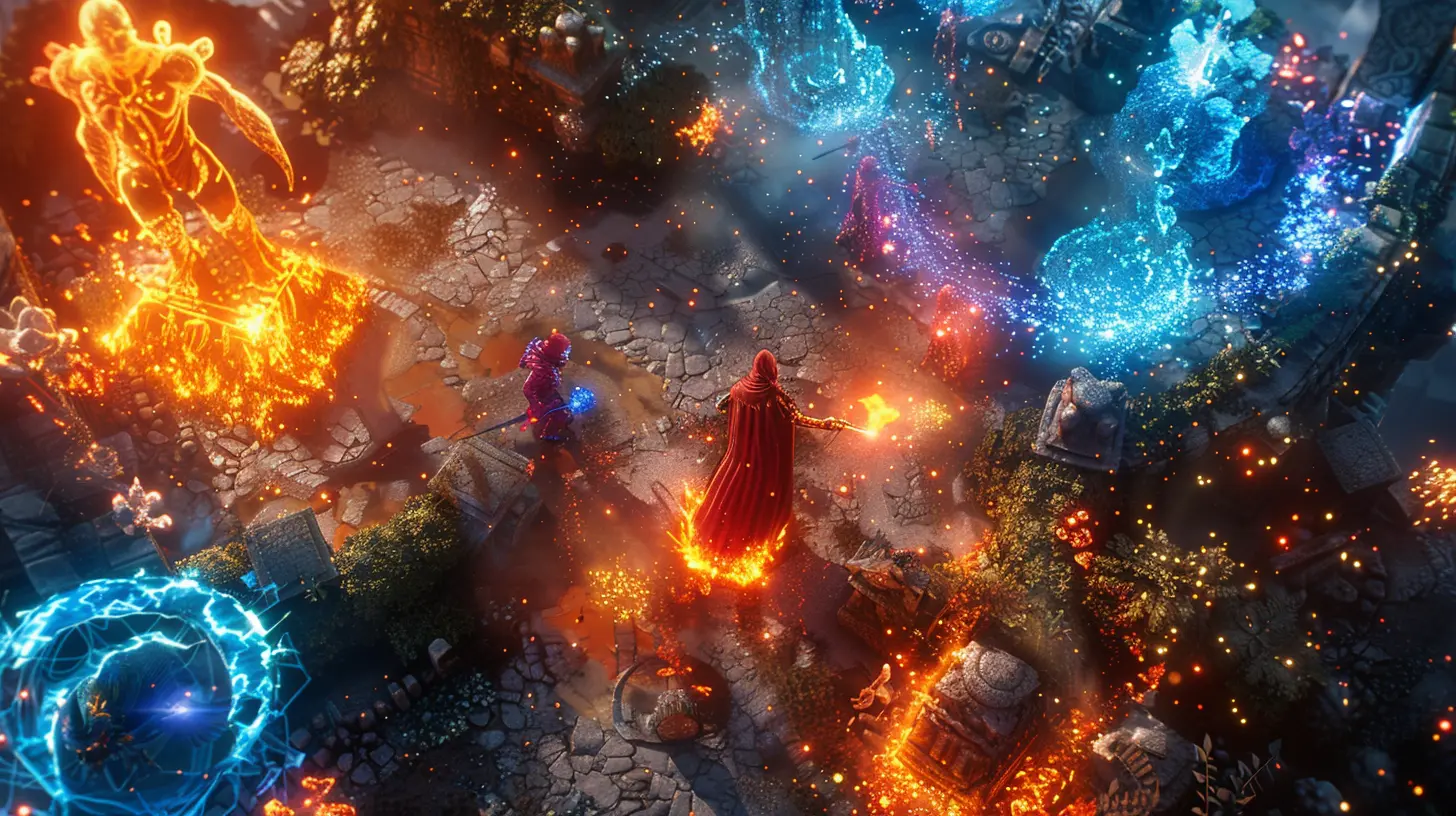
2. Overcooked! Series – The Ultimate Recipe for Fun (And Arguments)
Not all chaos needs explosions or punches. Sometimes, it’s just you, three friends, and a kitchen that’s one spark away from burning down.Overcooked! and its sequel are masterclasses in cooperative gameplay that demand teamwork, timing, and communication. At first, it’s chill. You chop tomatoes. You boil pasta. You plate dishes. Easy, right?
Then you’re dodging rats, screaming about who’s washing the dishes, and watching as the kitchen splits in half on a moving truck.
Why It Works: It requires actual coordination and skill, but levels throw in just enough absurdity to keep things light and laughable.
Fair warning though: friendships may be tested.
3. Gang Beasts – Wobbly Mayhem That Somehow Works
Take jelly bean-shaped characters, drop them in some of the weirdest levels ever made, and give them the ability to punch, grab, and toss each other into grinders.That’s Gang Beasts in a nutshell.
It’s like watching a drunken brawl between action figures—you never really feel in control, but that’s part of the charm. There’s a bit of strategy hidden under the surface (like headbutting effectively or lifting people just right), but most wins come from sheer ridiculous hilarity.
Why It Works: The physics make every match unpredictable. Skilled players have an edge, but even button mashers get wins just by sheer dumb luck.
4. TowerFall Ascension – Old-School Arcade Fun With Modern Twists
If you love pixel art and tight controls, TowerFall Ascension is a gem.It’s an archery-based combat game with one-shot kills and fast-paced rounds. Skilled players can dominate... until they get cocky and walk into a trap. The limited arrows, screen wrapping, and power-ups keep players on their toes.
Don't be fooled by its retro appearance—TowerFall has a high skill ceiling, but the fast matches and chaotic elements keep everyone engaged.
Why It Works: It’s precise and satisfying, but quick deaths and random elements make sure no one stays king of the hill for too long.
5. Mario Kart 8 Deluxe – Classic Karting With A Side of Blue Shells
When it comes to chaotic balance, Mario Kart 8 Deluxe might be the GOAT.Players with sharp reflexes and track knowledge will usually place high—but even the best can be humbled by a well-timed banana or a dreaded blue shell. The rubber-banding AI and item randomness give everyone a shot at victory, even if they’ve never touched a controller before.
Why It Works: It’s designed to level the playing field with sneaky catch-up mechanics, while still rewarding racers who drift like pros.
Also: that rage when you're hit on the final corner? Priceless.
6. Duck Game – Quack-Fueled Mayhem
Duck Game might fly under the radar (pun 100% intended), but it’s a hidden treasure in the world of couch chaos.You and your friends control armed ducks in frantic, one-hit shootouts. Weapons vary from standard pistols to absurd gadgets like mind control rays. The gameplay is fast, hilarious, and never the same twice.
The skilled players may develop reflexes worthy of John Wick, but the chaotic gunspawns and unpredictable reactions keep every round spicy.
Why It Works: The learning curve is steeper than it first appears, but the ridiculous weapons and quick matches level the playing field.
7. Nidhogg & Nidhogg 2 – Sword Fighting With A Dash of Absurd
A fencing game with minimalist art (and later, gloriously grotesque visuals), Nidhogg pits two players in a tug-of-war-style duel across bizarre arenas.Combat is super skill-based—you need timing, strategy, and precision. But sometimes, a flying disarm or random flying kick to the face turns the tide instantly. The balance comes from how fast everything can change. Victory is never guaranteed, even when you’re one screen from glory.
Why It Works: It’s built on tight mechanics, yet always on the edge of becoming a Looney Tunes episode.
8. Heave Ho – Teamwork Meets Pure Chaos
In Heave Ho, you and your team control limbless characters that use their hands to swing, grip, and launch each other across deadly pits.Sounds like a simple physics game, right? Wrong.
It’s both hilarious and maddening. Precision, coordination, and timing are key—but more often than not, you’ll launch a teammate to their doom or forget which arm you’re holding with.
Why It Works: There’s skill involved, no doubt. But chaos reigns, and that’s what makes it so memorable.
9. Move or Die – Fast, Furious, and Always Changing
Here’s an underrated gem: Move or Die.The game title says it all—you gotta keep moving or... well, die. But what makes this game shine is its rotating mini-games. One round might be about painting the floor, the next about avoiding spikes.
Some games favor speed, others strategy, and the constant shifts mean nobody can dominate every round. Even the most experienced player can get wrecked if they miss just one beat.
Why It Works: High-paced gameplay merges with ever-changing rules, keeping the advantage shifting every few seconds.
10. Stick Fight: The Game – 2D Madness at Its Finest
Simple name. Ridiculous fun.Stick Fight puts you in the shoes of stick figures in a 2D brawler where everything is destructible and weapons fall from the sky like party favors at a chaotic bachelor party.
Matches last seconds, sometimes just a lucky shotgun spawn away from ending. But over time, you’ll start seeing patterns, learning the physics, and mastering movement.
Why It Works: It’s hard not to smile watching your friend accidentally shoot themselves with a ricocheting laser beam.
Honorable Mentions
Let’s face it—there are too many great local multiplayer games to fit in one list. But here are a few others worth checking out if you want more balanced madness:- Ultimate Chicken Horse – Build the level as you play? Genius.
- Lethal League Blaze – Baseball meets fighting game meets stylish chaos.
- Boomerang Fu – Adorable food characters with boomerangs. Need I say more?
- Hidden in Plain Sight – Stealth, deception, and perfect party vibes.
- Worms W.M.D. – Turn-based chaos with exploding sheep.
Final Thoughts – Embrace the Madness
Local multiplayer games are about more than just winning. They’re about unforgettable moments—the kind where everyone’s yelling, laughing, and sharing a collective “What just happened?” gasp.The games that balance skill and chaos the best are the ones that give every player a fighting chance while still letting the most experienced shine. They keep things fair, but never boring. They create opportunities for clutch wins, ridiculous losses, and everything in between.
So the next time you invite your crew over, pass around the controllers, and fire up one of these gems. You’ll laugh. You’ll rage. You’ll probably lose to your little cousin. But you’ll love every second of it.
Game night? It just got a whole lot better.
all images in this post were generated using AI tools
Category:
Local Multiplayer GamesAuthor:

Audrey McGhee
Discussion
rate this article
2 comments
Brooks Love
Perfect mix of fun and competition for everyone!
July 27, 2026 at 4:35 AM
Audrey McGhee
I'm glad you enjoyed it! Finding that balance is key to keeping everyone engaged.
Lysara McPhail
Local multiplayer games are the best. They bring out the friendly rivalries and hilarious moments that just can't be matched online. Nothing beats laughing with friends while trying to outsmart each other!
May 17, 2026 at 3:33 AM
Audrey McGhee
Absolutely! There's something special about being in the same room, sharing laughs and competitive spirit. Local multiplayer games create unforgettable memories that online play just can't replicate.