Why Some Players Embrace Pay to Win Models
18 June 2026
Let’s be real—"Pay to Win" (or P2W) is one of the most controversial phrases in the gaming world. Mention it in any gaming forum and watch the fireworks spark. Some players absolutely despise it, calling it unfair, greedy, and the death of good game design. But surprisingly, a growing number of players are fully embracing this model.
Why? What makes some gamers not just tolerate Pay to Win mechanics, but actively seek them out?
Well, in this article, we’ll unwrap the “why” behind this polarizing trend. Grab your energy drink and settle in—we’re diving deep into the mindset behind Pay to Win and why it's not all doom and gloom for every player.
What Exactly is Pay to Win?
Before we sprint ahead, let’s put everyone on the same page. Pay to Win refers to games where players can spend real money to gain advantages—stronger gear, faster progress, or other elements that give them a leg up on others who don't pay. And no, we're not talking about purely cosmetic items here—we mean real gameplay advantages.Think of it like showing up to a race and being allowed to buy a faster car while others jog.
The Instant Gratification Generation
Let’s face it: we live in a world of instant noodles, next-day deliveries, and binge-watching entire series in one weekend. Patience? That’s so 1990s.Many players simply don’t have the time or desire to grind for hours just to level up a sword or unlock a character. They want to skip the grind and jump straight into the meat of the game. And guess what? If they’ve got the cash, they're willing to pay for that shortcut.
For these players, Pay to Win isn’t cheating—it’s just leveling the playing field between time-rich and time-poor gamers.
Time is Money, Literally
Let’s break it down: say you're a full-time professional with a demanding schedule. You've got maybe an hour to play each night before bed. Compare that to a teenager during summer break who can grind for 8 hours a day.If you’re the former, you might find P2W elements a relief rather than a rip-off. Spending a few bucks to boost progress can help you keep pace with other players without sacrificing your real-life responsibilities.
In a way, spending money becomes equivalent to spending time. It's like hiring a valet instead of parking your own car—same end result, just faster.
Competitive Edge Matters
Let’s talk about ego. Whether we admit it or not, we all like winning. There’s satisfaction in being on top of the leaderboard, dominating PvP battles, or being that high-level player everyone else wants on their team.For some, paying to win isn’t about skipping content—it’s about dominating the competition.
These players aren't shy about using every tool at their disposal to win, including their wallets. If dropping a few bucks gives them a game-changing advantage, they see it as tactical spending rather than unfair play.
Status and Social Flexing
Here’s the thing: gamer culture has evolved. In online games, especially MMOs, mobile RPGs, or even battle royale games, having rare skins, exotic mounts, or overpowered weapons is the new flex.Some players embrace P2W because it lets them stand out. It’s like rolling up to a party in a Lamborghini while everyone else pulls up on scooters.
They want others to notice their progress, power, and drip—and spending money is the fast lane to that status.
Supporting Developers (Yes, Really)
Believe it or not, some players view spending money in P2W games as a form of support. While ads and microtransactions often feel icky, they’re also how many free-to-play games stay alive.In their minds, supporting the devs financially—especially if they enjoy the game—is a win-win deal.
Sure, they’re getting an advantage, but they’re also helping fund future updates, expansions, and server maintenance. In this light, their spending doesn’t just serve them personally; it benefits the wider community too.
Pay to Win Isn’t Always "Win"
Here's a plot twist: not all P2W purchases guarantee dominance.Many games subtly balance their monetization so that spending offers advantages, but not enough to outright break the game. In fact, some games are engineered to make you think you're winning more just because you spent money, even if the actual impact is minor.
It's all about perceived value—kind of like buying premium fuel for your car, even though most engines run just fine on regular. You feel like you're getting more, and that feeling alone can be worth the money to some.
The Psychology of Spending: It's Deeper Than You Think
Let’s get a little nerdy for a second. Game developers use psychology like a samurai uses a sword—they know exactly how to strike. Many P2W systems are designed to trigger dopamine hits.Spend money, get a reward. Instant satisfaction. Boom—your brain is happy.
Over time, this creates a feedback loop. Some players start to associate spending with success. If they’re stuck on a level or getting crushed in PvP, throwing a few dollars at the problem can feel like “solving” it. It’s like hitting the “easy” button in real life.
FOMO and Limited-Time Offers
Timed events, exclusive items, and “only available for 24 hours” pop-ups are like putting candy in front of a kid and saying they can only have it if they act fast.Limited-time offers tap into that fear of missing out (FOMO), and many players don’t want to fall behind or miss out on status symbols that won’t return. Throw in a ticking countdown, and wallets open faster than you can say “microtransaction.”
Not All Games Handle P2W Equally
Let’s give credit where it’s due. Some developers implement Pay to Win mechanics with at least some grace. There's a spectrum—from completely broken P2W where money buys god-mode, to softer versions where spending just speeds things up a bit.Some games also offer “whale protection,” by balancing matchmaking so that heavy spenders don’t always roll over casual players.
For these games, the line between P2W and “Pay for Convenience” starts to blur—and that’s where a lot of players feel more comfortable swiping their cards guilt-free.
Community Acceptance and Cultural Norms
Believe it or not, what’s accepted in one gaming community might be completely taboo in another.In many Western communities, P2W often carries a stigma. But in regions like Southeast Asia or South Korea, spending money in games is just part of the culture—especially in mobile games.
Over there, being a “whale” can even earn you respect, not shame. It’s a different mindset: “If you worked hard for that money and want to spend it on your hobby, go for it.”
So, where you live and what gaming culture you’re part of can heavily influence whether you see Pay to Win as a sin… or just another strategy.
The Power of Choice
At the end of the day, it all comes down to freedom.Some players love the idea that they can play however they want—grind for free, pay to skip, or fall somewhere in between. In an age where customization is king and personal experience matters more than static rules, having the option to pay for progress feels empowering.
Is it ideal for everyone? Definitely not. But it’s one more way to tailor the gaming experience to fit your lifestyle, your schedule, and your priorities.
So, Is Pay to Win Really "Winning"?
Here's the million-dollar question: are these players truly winning?Well… it depends on what “winning” means to you. If you define it as having fun, beating difficult content, or expressing yourself—you might say yes. If your focus is fairness, skill-based victories, and competitive integrity—probably not.
But for those who embrace the model, Pay to Win lets them game on their own terms. And in a world filled with stress, deadlines, and real-life grind, maybe that's a win in its own right.
Wrapping It Up
Pay to Win isn’t going anywhere. Whether you love it, hate it, or fall somewhere in the middle, it’s part of the modern gaming landscape. And while it may stir up drama in online communities, it’s worth understanding that not everyone sees it through the same lens.For many players, it’s not about "cheating the system"—it's about bending it to fit their own rhythm. Whether it’s for time-saving, competitive edge, flex status, or just pure convenience, embracing Pay to Win is a choice some players make consciously, and often, unapologetically.
Games are personal. And for some, paying to win is just playing smart.
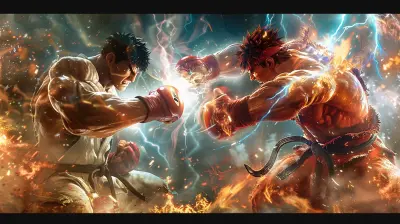
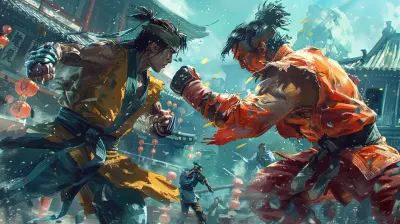
all images in this post were generated using AI tools
Category:
Pay To Win GamesAuthor:

Audrey McGhee
Discussion
rate this article
1 comments
Julianne Wells
Pay to win can be frustrating, but for some players, it offers quicker success and an advantage in competition.
June 22, 2026 at 2:51 AM
Audrey McGhee
That's a valid point. For some gamers, the convenience and competitive edge can outweigh the frustrations.